Ferrari is reportedly already focusing on their 2027 car as Mercedes’ compression trick gains attention. What does this mean for F1’s future?
When you think of Ferrari, you think of passion, pride, and a relentless hunger to return to Formula 1 glory. And now, the rumour mill is buzzing once again—Ferrari is reportedly already focusing on their 2027 car, even though the current era still has years to go. Why such an early shift? Because expectations are rising that Mercedes’ innovative “compression trick” will be declared legal, potentially shaking up the competitive order.
It’s like preparing for a marathon by adjusting your pace miles ahead—not because you’re slowing down, but because you’re planning for the perfect final sprint. Ferrari seems to be doing exactly that.
1. Ferrari’s Long-Game Strategy Explained
Ferrari fans know the team often tries to chase both short- and long-term gains. But this time, the long-term seems to be taking priority. Reports suggest that the Scuderia wants to get a head-start on 2027, which will feature one of the biggest regulation resets since 2022.
Ferrari doesn’t just want to compete—they want to dominate the next cycle.
2. Why 2027 Matters More Than Ever
The 2027 season is shaping up to be a reset button for the entire sport. Regulations will once again adjust aerodynamics, chassis dimensions, and power unit performance.
In F1, these reset years often create unexpected stars—just look at Red Bull in 2022 or Mercedes in 2014. Ferrari wants to make 2027 their moment.
3. Understanding Mercedes’ “Compression Trick”
Mercedes has been turning heads with a mysterious aerodynamic and suspension innovation described as a “compression trick.”
While the exact mechanism remains under wraps, insiders believe it helps the car generate additional stability under acceleration and cornering.
And here’s the twist—the FIA is expected to rule it legal.
If that happens, Mercedes could leap ahead for the next two seasons.
4. Why Ferrari Isn’t Taking Chances
With speculation that Mercedes’ method will be allowed, Ferrari appears to be shifting focus. Instead of chasing a potentially unbeatable advantage in the short-term, they are planning a future-proof response.
It’s a strategic retreat today for a powerful charge tomorrow.
5. The Technical Reset: A Golden Opportunity
Regulation resets level the playing field. Ferrari knows this. Since every team begins from a blank canvas, innovation becomes more important than imitation.
Ferrari wants to enter 2027 ahead, not playing catch-up.
6. Lessons Ferrari Learned from Previous Regulation Changes
In 2022, Ferrari had the early lead but lost momentum. In 2017, they misjudged aerodynamic development. In 2009, they missed the double diffuser advantage.
This time, they don’t want history to repeat itself.
7. The Role of Frederic Vasseur in This Shift
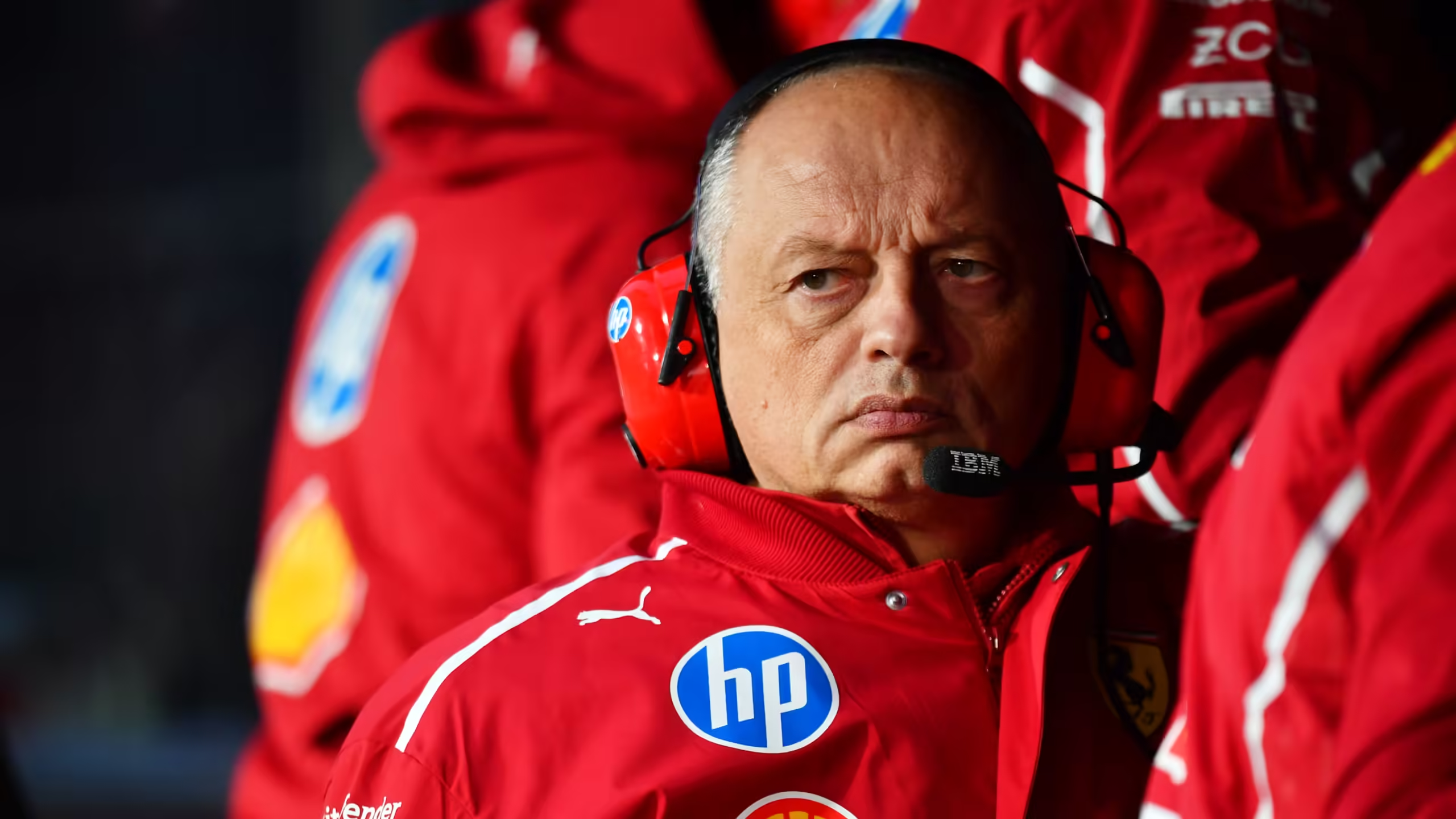
Team principal Frederic Vasseur is known for long-term planning. Under his leadership, Ferrari aims to build a multi-year project rather than jumping between short-term fixes.
His strategy? Slow down now to speed up later.
8. Could 2026 Be Sacrificed for 2027?
It’s possible. With power units also changing in 2026, Ferrari might treat that season as a transitional period. Not a full sacrifice, but a stepping stone.
Expect competitiveness, but not desperation.
9. How Ferrari’s Wind Tunnel Work Is Evolving
Sources indicate Ferrari is adjusting its wind tunnel schedule to allocate more time toward 2027 concepts. That means:
- New airflow models
- Prototype chassis shapes
- Early CFD development
They don’t want to repeat the mistakes of starting late.
10. The Future of Power Units and Ferrari’s Advantage
Ferrari has always been proud of its power unit capabilities. And the 2027 regulations may give them a chance to flex their engineering muscles again.
A lighter, more efficient hybrid package is already in the works.
11. Why an Early Start Could Pay Off Big
Think of it like studying months in advance for an exam while everyone else is last-minute cramming. When 2027 arrives, Ferrari could have two years of foundational data.
That’s the kind of head-start championships are built on.
12. What This Means for Charles Leclerc and Lewis Hamilton
With Hamilton joining and Leclerc already committed long-term, Ferrari’s driver pairing for 2025 and beyond looks strong.
Both drivers could benefit from a car built on long-term thinking rather than rushed upgrades.
13. Risks of Focusing Too Early
Of course, no strategy is perfect. Ferrari faces risks like:
- Falling behind in 2025–2026
- Giving rivals confidence
- Missing unexpected gains in the short-term
It’s a gamble—but a calculated one.
14. The Competitive Landscape in 2027
If things continue as predicted, 2027 could see:
- Ferrari arriving strongest
- Mercedes benefiting from their legal innovation
- Red Bull adjusting to another major regulation shift
- Aston Martin and McLaren pushing hard with maturing talent pools
It could be the most competitive season in years.
15. Will Ferrari’s Bet Change the F1 World?
If Ferrari’s early focus pays off, it might reshape the competitive hierarchy. We might see Ferrari leading another golden era instead of chasing the pack.
And isn’t that what Ferrari fans have been waiting for?
Conclusion
Ferrari’s decision to look ahead—far ahead—is bold, ambitious, and rooted in lessons from history. While others fight over 2025 and 2026, Ferrari is quietly building for 2027, where everything resets and everything is possible.
Only time will tell if this gamble becomes genius. But one thing is clear: Ferrari is reportedly already focusing on their 2027 car, and the rest of the grid should pay attention.
FAQs
1. Why is Ferrari focusing on their 2027 car so early?
Because the upcoming regulation changes in 2027 provide a major opportunity to reset the competitive order, and Ferrari wants to be ahead of the curve.
2. What exactly is Mercedes’ compression trick?
It’s believed to be an aerodynamic or suspension mechanism that enhances stability. The FIA is expected to rule it legal.
3. Will Ferrari sacrifice 2026 development?
Not fully, but they may reduce short-term intensity to prioritize long-term gains for 2027.
4. How will the 2027 rules affect the sport?
They will redefine aerodynamics, chassis design, and hybrid power units—making it a massive reset.
5. How will Charles Leclerc and Lewis Hamilton benefit from a 2027-focused plan?
They may get a more competitive car built from long-term strategy rather than short-term fixes.