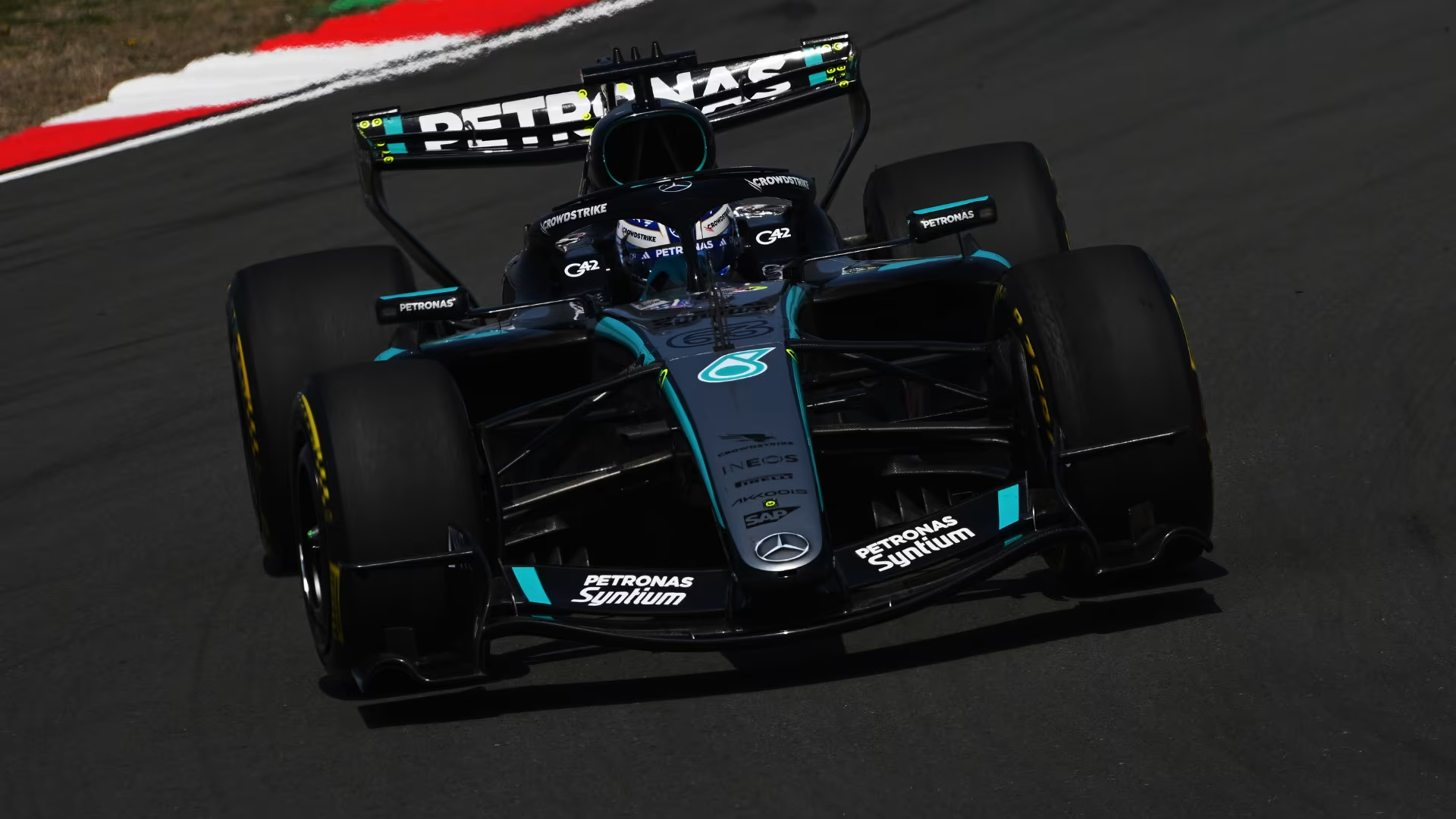
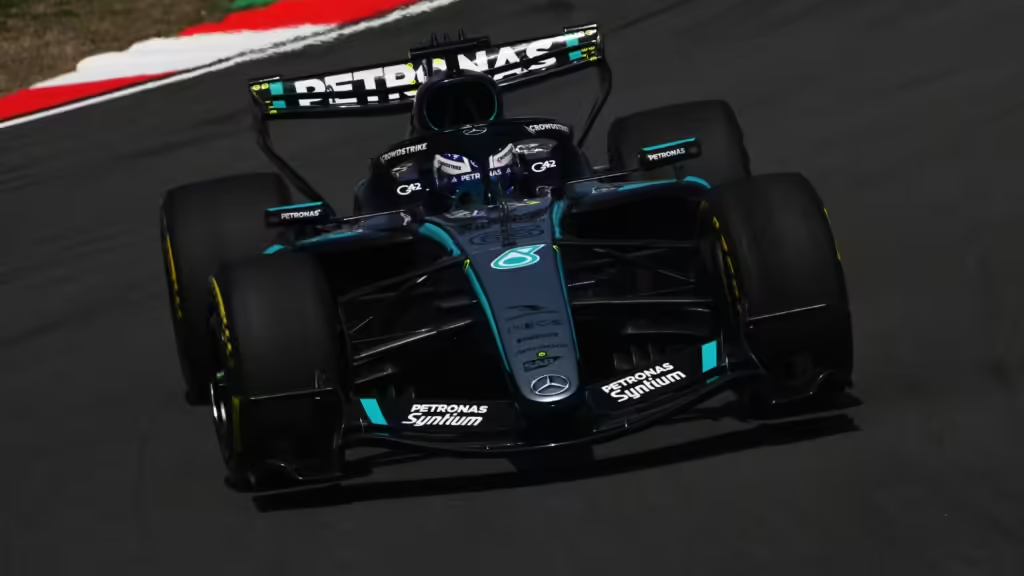
A thrilling start to the weekend as Russell leads Mercedes 1-2 in FP1. Full recap and insights from the action-packed ‘Chinese Grand Prix FP1’.
Introduction
Formula 1 weekends are often filled with multiple practice sessions, but sometimes teams get just one precious hour to understand the track, adjust their cars, and prepare for battle. That’s exactly what happened during the sole practice session at the Chinese Grand Prix weekend.
And what a session it turned out to be.
Fresh off his victory in Australia, George Russell once again demonstrated his strong form by topping the FP1 timesheets. The Mercedes AMG Petronas Formula One Team driver led a dominant Mercedes 1-2, with teammate Kimi Antonelli finishing second and Lando Norris placing third for McLaren Racing.
With Sprint Qualifying scheduled later in the day, every lap mattered. Drivers pushed hard, incidents occurred, and strategies were tested—all within a single intense hour at the Shanghai International Circuit.
1. The Importance of the Only Practice Session
Practice sessions in Formula 1 are usually where teams quietly prepare for the race weekend. But when there’s only one session, the pressure skyrockets.
Think of it like preparing for an exam with just one practice test beforehand. You have limited time to figure out what works and what doesn’t.
For teams, FP1 at the Chinese Grand Prix was crucial because:
- It was the only chance to test setups
- Teams needed to gather tyre and performance data
- Drivers had to learn track conditions quickly
- Sprint Qualifying was just hours away
Every second on track mattered.
2. Early Rush as Drivers Hit the Track
As soon as the green light appeared in the pit lane, drivers wasted no time getting out.
Cars lined up like a queue at a busy highway toll booth, each driver eager to log early laps. With only 60 minutes available, sitting in the garage simply wasn’t an option.
This early rush created a lot of on-track activity, which soon led to the first incident of the session.
3. Russell Sets the Early Benchmark
Very early into the session, George Russell showed that his strong form from Australia wasn’t a fluke.
He quickly set a competitive lap time that placed him at the top of the leaderboard.
His early pace hinted at something important:
Mercedes had arrived in Shanghai with serious speed.
Behind him were strong challengers including Charles Leclerc and teammate Kimi Antonelli, but Russell’s confidence on the track was evident from the start.
4. Spins, Contact and Early Drama
Formula 1 sessions rarely stay calm for long.
One of the first dramatic moments came when Franco Colapinto spun his Alpine car at Turn 9. Fortunately, he avoided major damage, but the incident highlighted how tricky the track conditions were.
Shortly after, another moment caught everyone’s attention.
Lando Norris attempted to overtake Lewis Hamilton, and the two drivers made light contact while battling for track position.
The incident was reviewed by the stewards but ultimately required no further action.
Hamilton also had his own moment later when he spun off at Turn 6, showing that even the most experienced drivers were struggling to find the perfect balance.
5. Virtual Safety Car Interruptions
The session was briefly interrupted when debris on track required clean-up.
Race control deployed a Virtual Safety Car (VSC), slowing the pace while marshals cleared the circuit.
While the pause was short, it disrupted several drivers’ attempts at fast laps.
In a session where time was already limited, even a few minutes lost can affect preparation.
6. Traffic Problems Frustrate Drivers
Heavy traffic became a major talking point during the session.
Rookie driver Isack Hadjar was particularly vocal over the radio, calling the traffic situation “unbearable.”
And he wasn’t exaggerating.
With every car on track at the same time, drivers struggled to find clean air for fast laps.
It’s a bit like trying to run a sprint in a crowded street—you simply can’t reach your top speed.
7. Mid-Session Standings and Strategy Shifts
At the halfway mark, the leaderboard looked like this:
- George Russell
- Charles Leclerc
- Kimi Antonelli
Russell’s lap of 1:34.169 placed him comfortably ahead.
Meanwhile, Carlos Sainz had barely run any laps due to a suspected data issue at Williams Racing.
That meant he spent much of the session stuck in the garage while others gathered valuable information.
8. Soft Tyres Change the Game
As the session progressed, teams began switching to soft compound tyres.
This is when lap times usually drop dramatically.
The softer rubber offers better grip but lasts fewer laps—perfect for qualifying simulations.
Once these tyres appeared, the leaderboard began to shuffle rapidly.
Drivers started pushing harder, and times began to tumble.
9. Russell’s Fastest Lap Dominance
When Russell switched to soft tyres, he delivered an outstanding lap:
1:32.807
Then he improved it even further.
His final best time of 1:32.741 placed him firmly at the top of the timesheets.
The gap to teammate Antonelli was just 0.120 seconds, confirming a strong Mercedes 1-2 performance.
For Russell, it was another statement performance after his season-opening win in Australia.
10. McLaren’s Performance With Norris and Piastri
McLaren also showed encouraging pace.
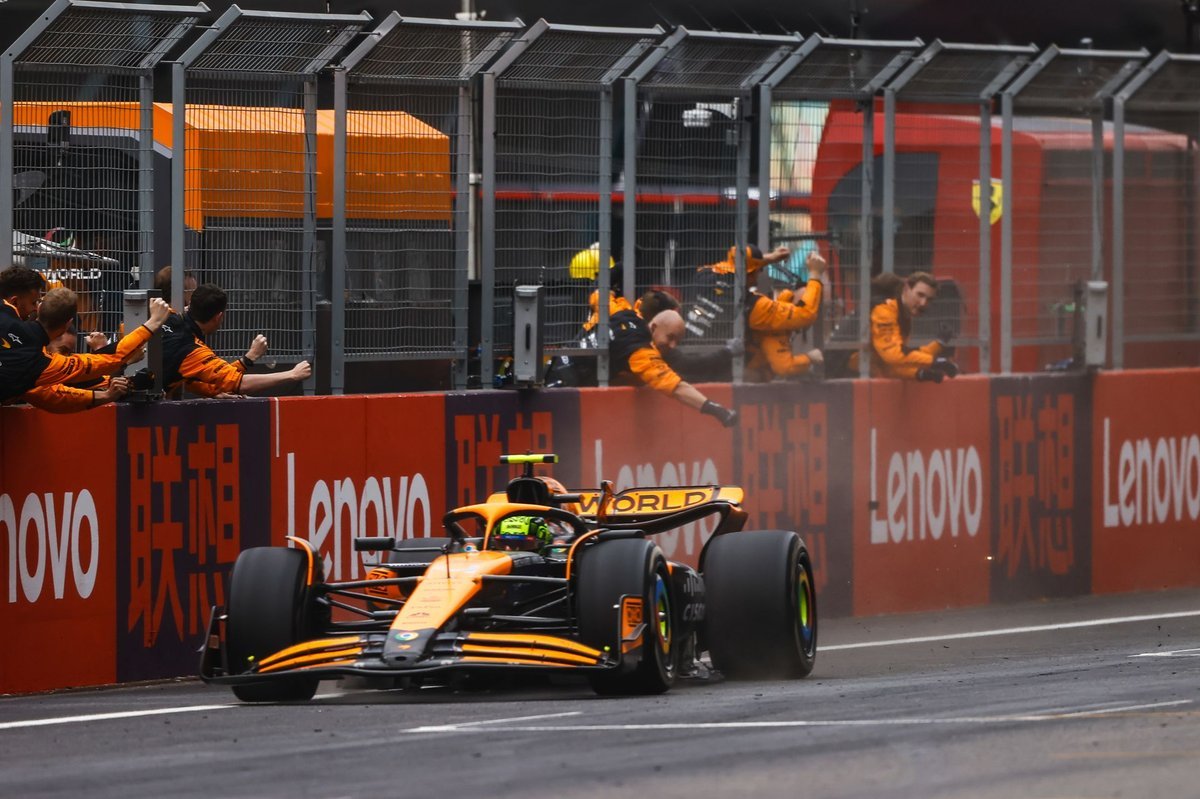
Lando Norris climbed to third place late in the session, while teammate Oscar Piastri secured fourth.
Although they were several tenths behind Russell, their consistency suggests McLaren could challenge in Sprint Qualifying.
Both drivers looked comfortable on the Shanghai circuit, and their long-run pace appeared promising.
11. Surprise Performances in the Top Ten
One of the standout performances came from Oliver Bearman, who placed seventh for Haas F1 Team.
Finishing ahead of reigning world champion Max Verstappen was a major highlight for the young driver.
The rest of the top ten included:
- Nico Hulkenberg
- Pierre Gasly
These performances hinted at a tightly packed midfield battle for the rest of the weekend.
12. Difficult Session for Williams
While Mercedes celebrated, it was a tough session for Williams.
Both Alex Albon and Carlos Sainz struggled to find pace.
Their positions:
- Albon – 16th
- Sainz – 17th
Sainz’s lack of track time due to technical issues made it difficult to optimize the car setup.
With Sprint Qualifying approaching, the team had little time left to recover.
13. Rookie Challenges and Track Incidents
For young drivers, Sprint weekends can be especially challenging.
Arvid Lindblad experienced one such difficulty when he stopped his car at Turn 14.
The issue forced him to end his session early, meaning he missed valuable practice time.
For rookies trying to prove themselves in Formula 1, losing track time can be incredibly frustrating.
14. What This Means for Sprint Qualifying
With FP1 complete, the focus immediately shifted to Sprint Qualifying.
Teams now had to analyze their data quickly and adjust setups before the next competitive session.
Key questions heading into qualifying included:
- Can Mercedes maintain its pace advantage?
- Will McLaren close the gap?
- Can Red Bull bounce back after a quiet session?
The stage was set for an exciting evening.
15. Key Takeaways From Chinese Grand Prix FP1
Several important conclusions emerged from the session:
1. Mercedes looks strong
Russell and Antonelli delivered impressive pace.
2. McLaren remains competitive
Norris and Piastri are clearly in the fight.
3. Traffic was a major problem
Drivers struggled to find clear laps.
4. Rookie drivers faced challenges
Incidents limited track time for some.
5. Sprint Qualifying could be unpredictable
The field appears very close.
Conclusion
The sole practice session of the Chinese Grand Prix delivered drama, speed, and plenty of storylines.
At the center of it all was George Russell, who continued his impressive form by topping the timesheets and leading a Mercedes 1-2 finish.
But while FP1 gave us a glimpse of team performance, the real test was still ahead. With Sprint Qualifying looming, teams had only a short window to refine their setups and plan their strategies.
If the practice session is any indication, the rest of the weekend promises intense battles, surprise performances, and maybe even a few more dramatic moments on track.
Formula 1, after all, rarely follows a predictable script.
FAQs
1. Who was the fastest driver in Chinese Grand Prix FP1?
George Russell set the fastest time during FP1, finishing ahead of teammate Kimi Antonelli and McLaren’s Lando Norris.
2. Why was there only one practice session in China?
Because the race weekend included a Sprint format, which reduces the number of practice sessions to just one before Sprint Qualifying.
3. Which team performed best during FP1?
Mercedes appeared strongest, securing the top two positions with Russell and Antonelli.
4. Were there any incidents during the practice session?
Yes. Franco Colapinto spun at Turn 9, Lewis Hamilton had a spin at Turn 6, and Arvid Lindblad stopped on track, causing interruptions.
5. What happens after FP1 in a Sprint weekend?
After FP1, teams move directly to Sprint Qualifying, which determines the grid for the Sprint race.